Sea
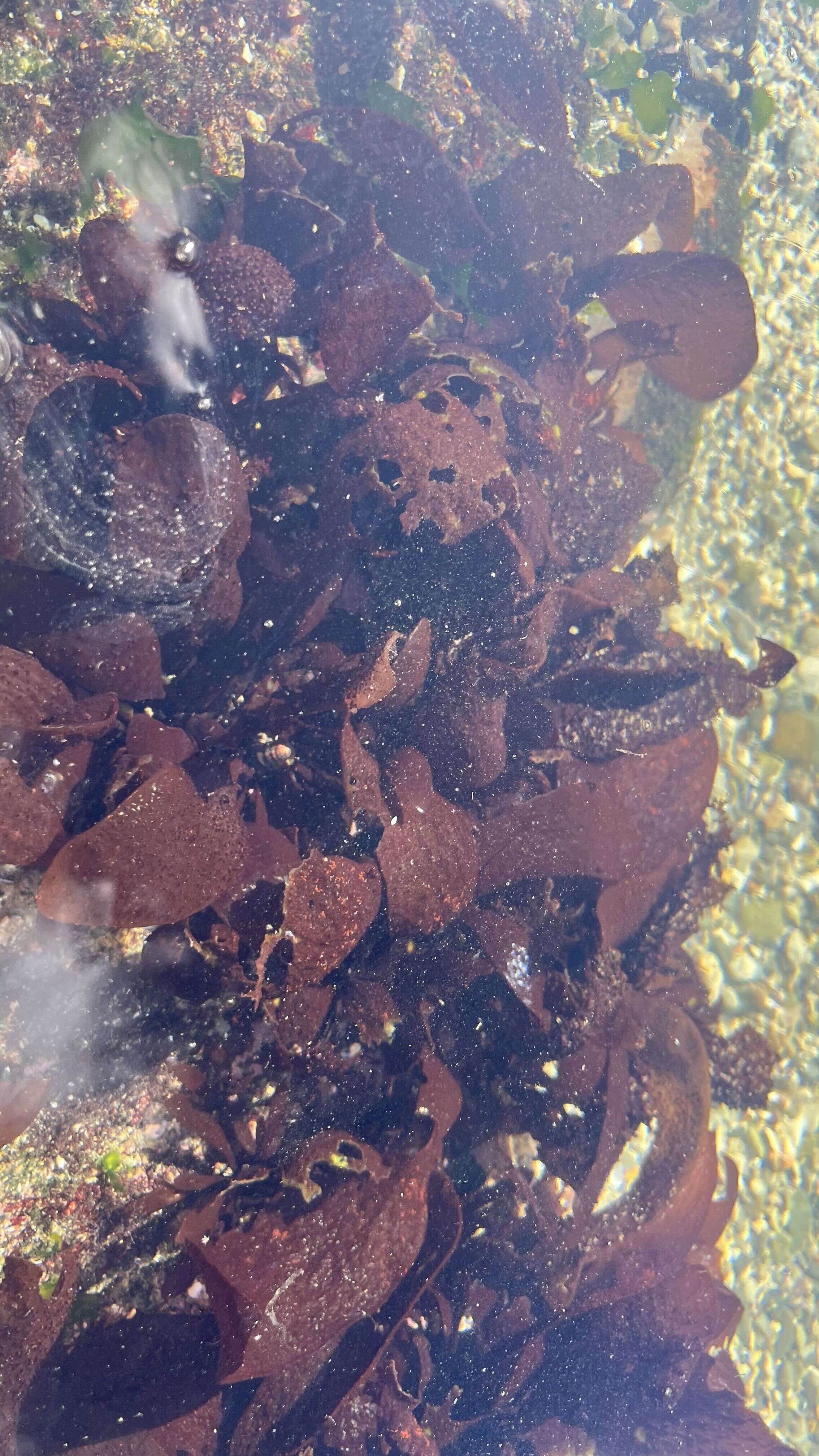
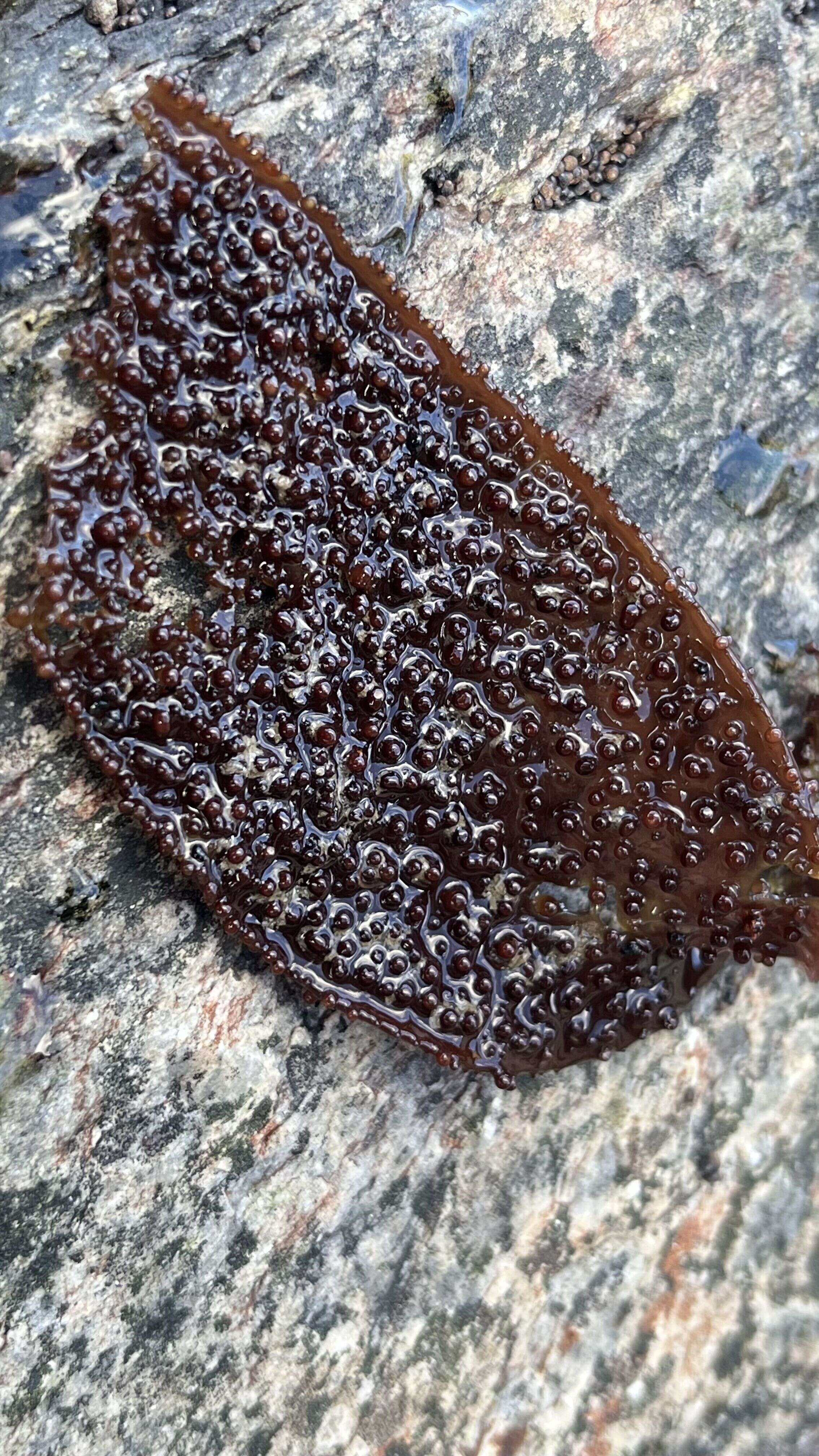
About: Gigartina polycarpa, commonly known as Tongue Weed, is a red seaweed species native to the coastal waters of the Cape Peninsula, South Africa. It is a perennial marine alga that contributes to the rich biodiversity of the region and forms part of the lower intertidal seaweed community.
Identification: Tongue Weed grows in dense, turf-like clumps attached to rocky substrates. Its blades are tough, fleshy, and oval-shaped, with a rough texture due to numerous papillae (small bumps), resembling a tongue—hence its common name. Colors range from yellow-brown to reddish-brown, and older or deeper individuals may appear almost black.
Habitat: This species is found in the lower intertidal zone, where it avoids extreme desiccation and benefits from constant submersion and wave action. It prefers rocky shores of the Cape region, from the mid–lower intertidal zones into shallow subtidal habitats.
Uses: While Tongue Weed is not widely used as food, it shares qualities with other red seaweeds valued for carrageenan extraction, a natural gelling agent used in foods, cosmetics, and pharmaceuticals. Red algae, including Gigartina species, are harvested globally for these applications. Locally, they also contribute to marine ecosystem health, providing surface area and food for small invertebrates.
Harvesting Tips: As with most marine algae, collection should only be done with local permission, ideally from drift-cast material or unattached specimens. Harvesters should select healthy, intact fronds from clean waters, avoiding any discolored or decomposing parts. Rinse gently in seawater then fresh water, and dry in a shaded, well-ventilated area for preservation.
Fun Fact: Tongue Weed is one of the densest and coarsest-textured red seaweeds on the Cape Peninsula, forming large patches underwater that look and feel like rough tongues. These dense seaweed turfs not only stabilize the seafloor but also support a myriad of tiny marine creatures.