Sea
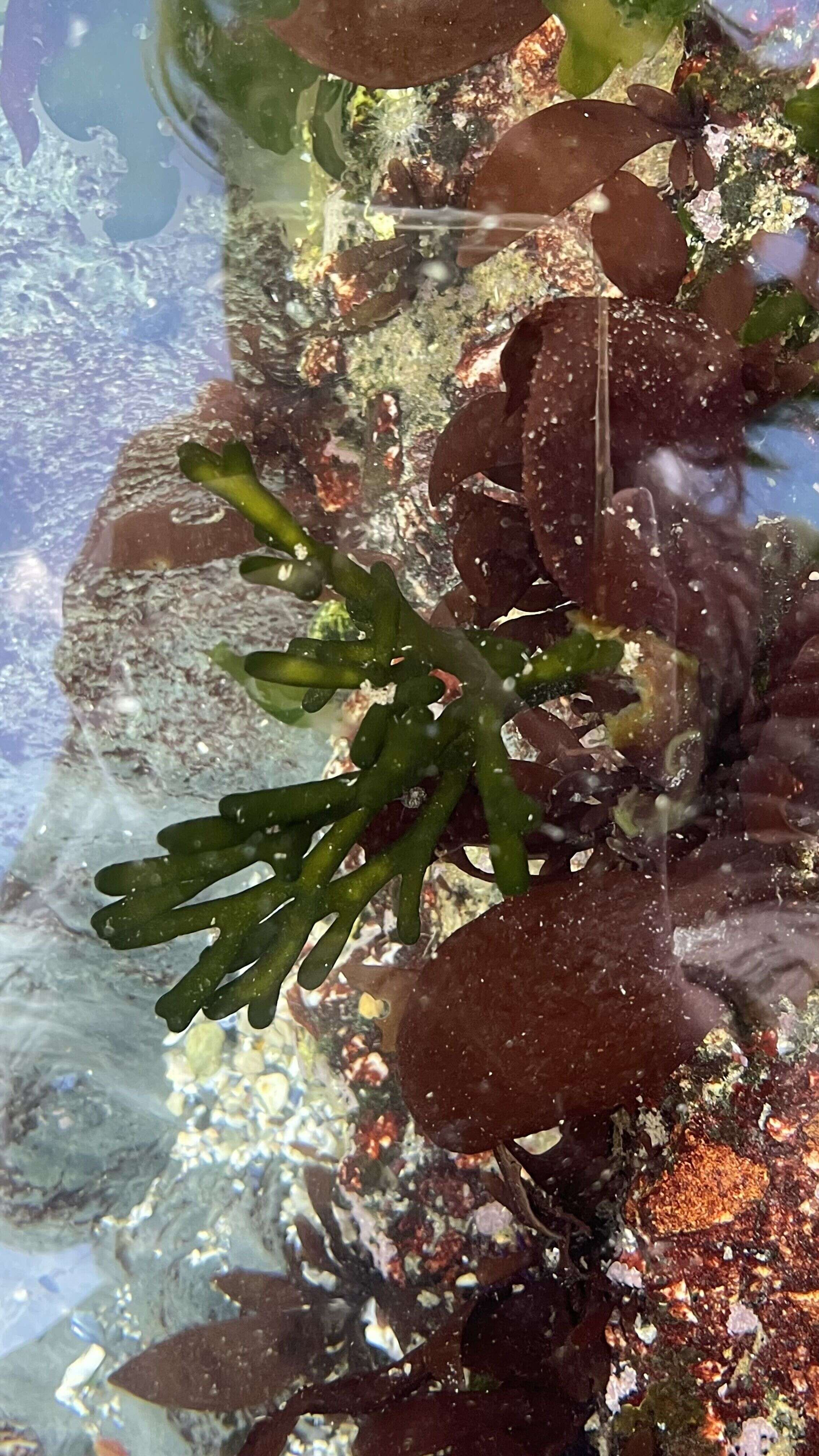
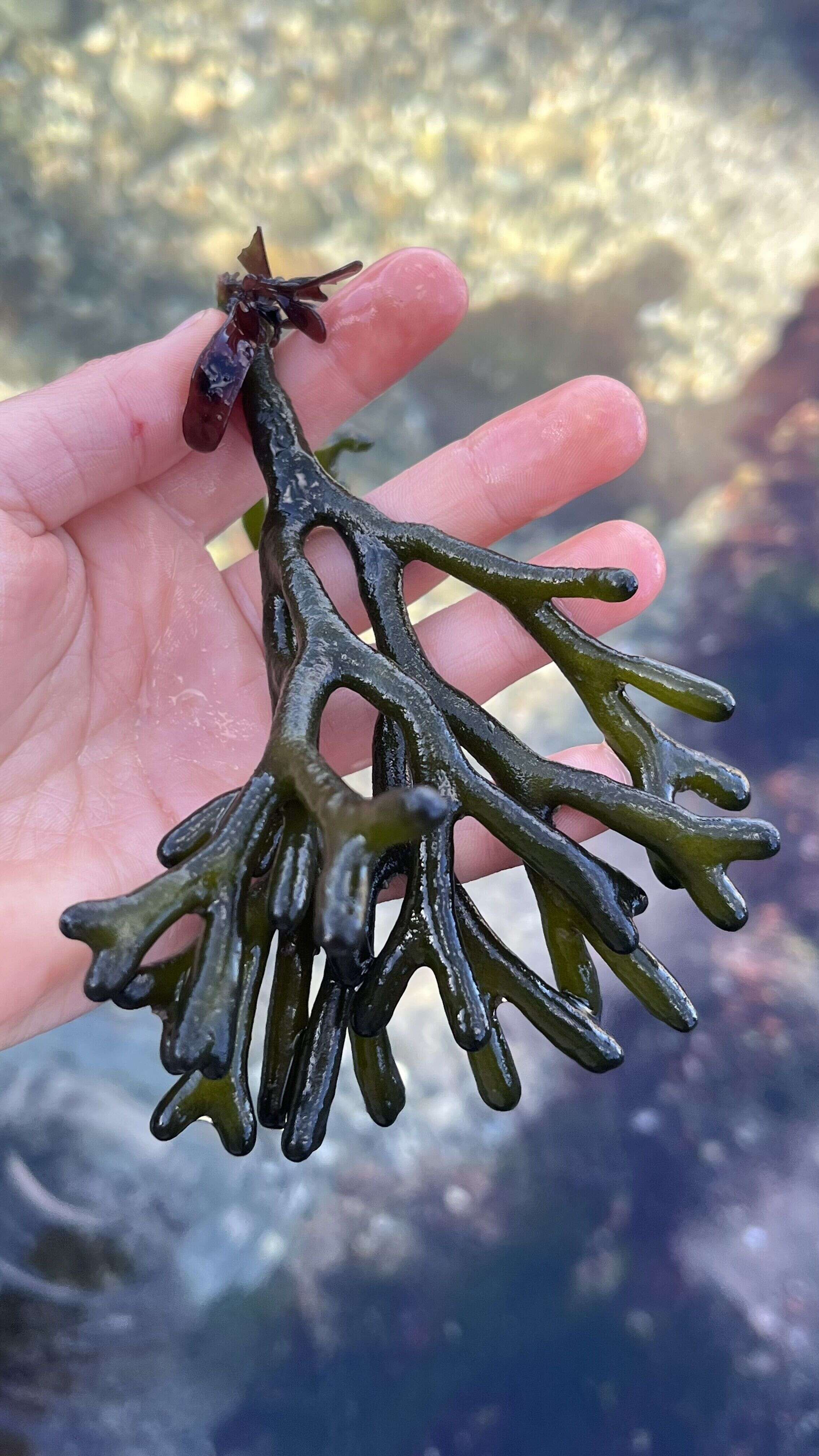
About: Dead Man's Fingers is a green seaweed known for its unusual, finger-like appearance. It is spongy, velvety to the touch, and can grow in clusters that resemble swollen green fingers. Although it's considered invasive in some parts of the world, it is native to parts of the Southern Hemisphere, including South Africa. It is edible and used in some coastal cuisines, though less commonly than other seaweeds like sea lettuce.
Identification: This seaweed is soft, dark green, and has a tubular, branching structure that looks like short, stubby fingers—hence its name. The branches are hollow and velvety, not slimy. Individual "fingers" are usually 5–15 cm long and 1–2 cm thick. It attaches to rocks or other hard surfaces with a small disc-shaped holdfast.
Habitat: Dead Man's Fingers typically grows in the intertidal to shallow subtidal zones. It's commonly found on rocky shores, tide pools, and reefs. It prefers sheltered areas with less wave action. In South Africa, it can be seen along parts of the southern and western coastlines, especially where clean, cool water flows over rocks.
Uses: The seaweed is edible and has been used in some traditional dishes in Asia and coastal Europe. Its texture is soft and slightly chewy. It can be eaten raw in salads or cooked in soups and stir-fries. However, it is not a widely consumed seaweed in South Africa, and some people find its texture unusual. It has also been investigated for its potential in biotechnology and cosmetics due to its bioactive compounds.
Harvesting Tips: Only collect fresh, healthy-looking specimens growing in clean, unpolluted areas. Avoid any that feel slimy or are discoloured. The best time to harvest is during low tide. Cut the seaweed with a sharp knife or scissors above the holdfast to allow for regrowth. Rinse it well in seawater first, then fresh water before using.
Fun Fact: Despite its eerie name, Dead Man's Fingers is one of the softest seaweeds to touch. Its velvety texture is so distinctive that it's been studied as a natural source of antimicrobial and antioxidant compounds that may have skin-care applications.