Land
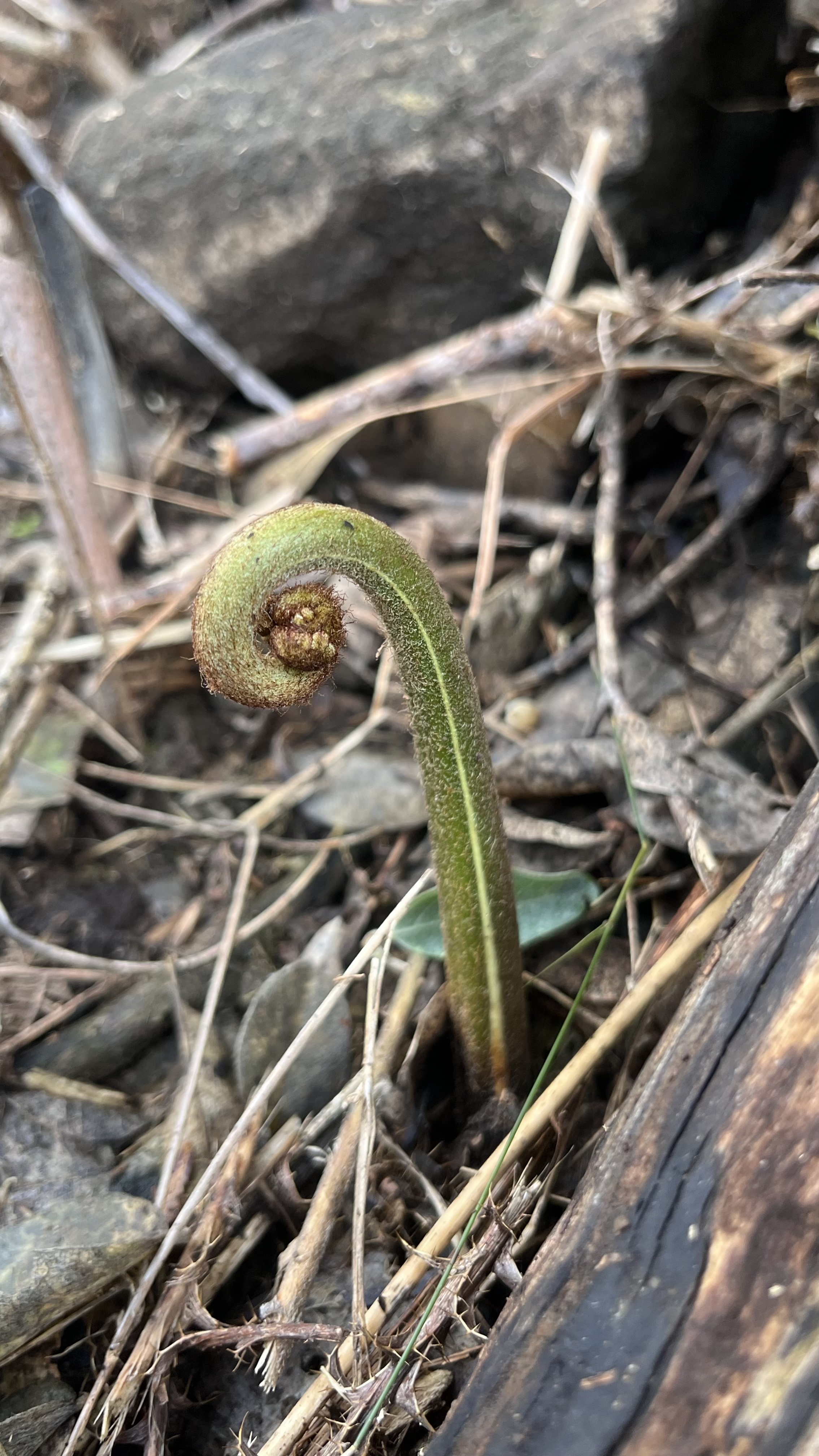
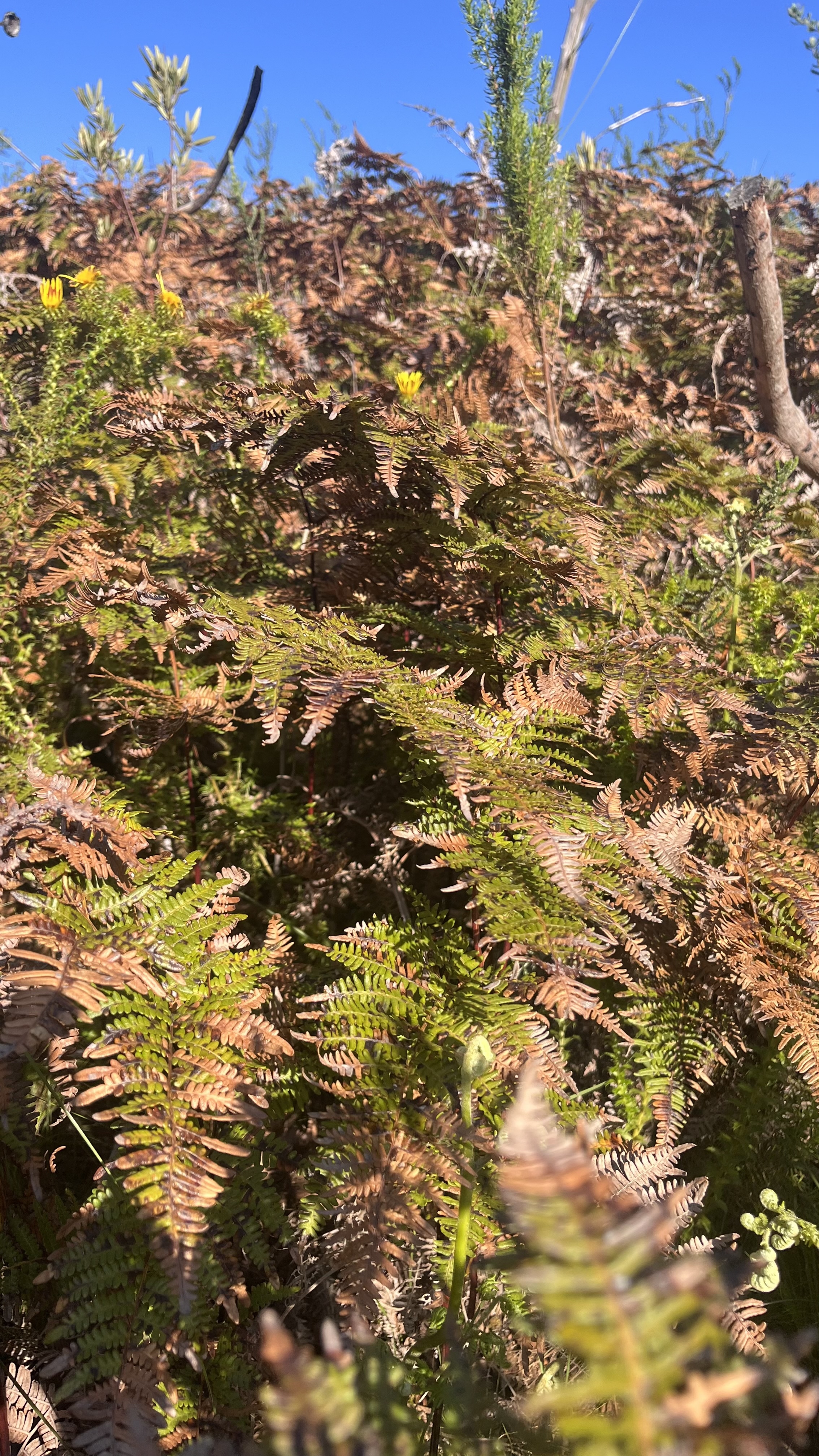
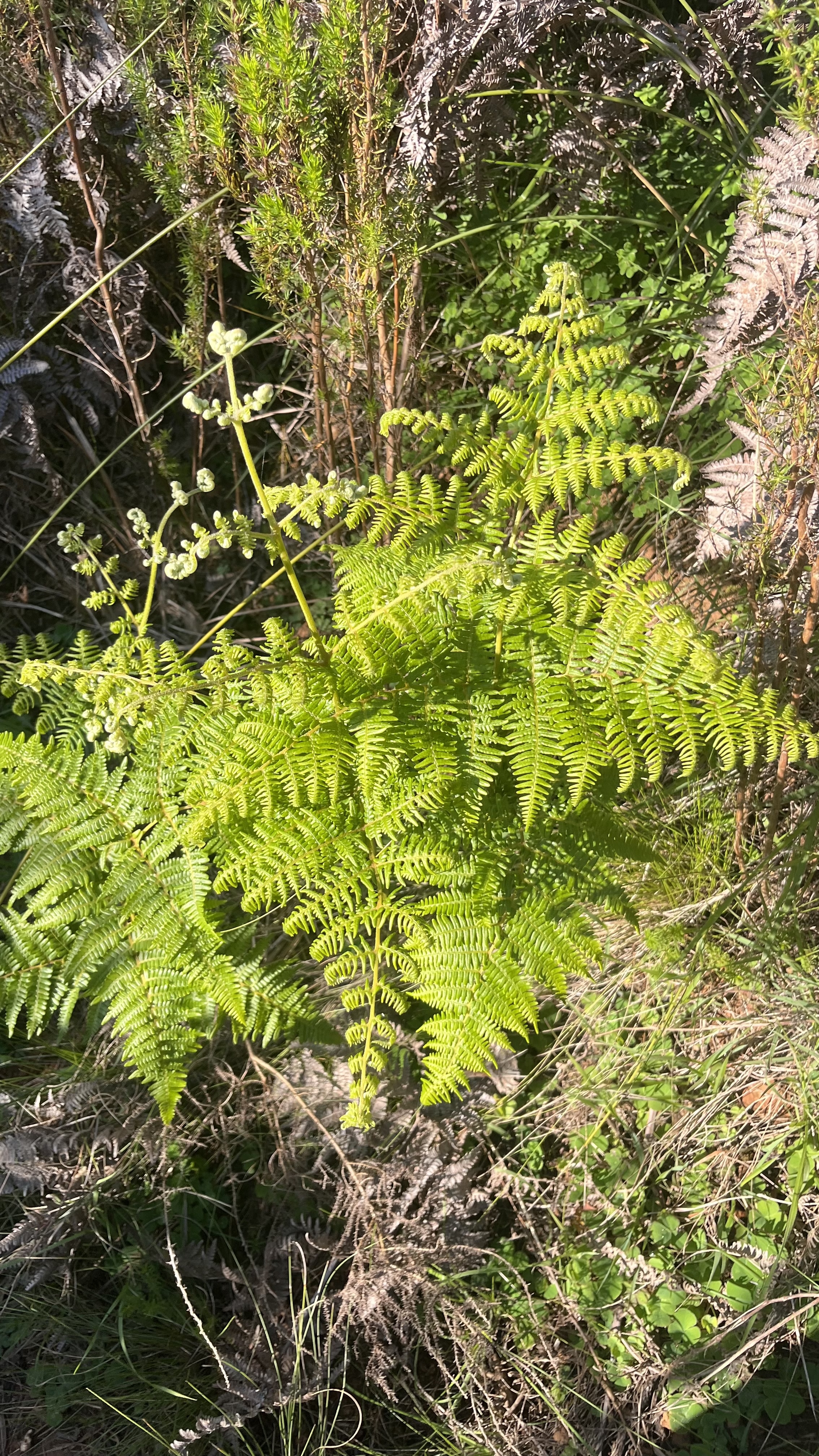
About: Common Bracken is a widespread fern species that grows in many parts of the world, including South Africa. Its young, coiled fronds, commonly called fiddleheads, are edible when properly prepared. Mature fronds are large, triangular, and highly divided, but are generally not eaten due to their tough texture and potential toxicity. Fiddleheads are appreciated for their delicate flavor and nutritional content, often compared to asparagus.
Identification: The young fronds (fiddleheads) emerge tightly coiled in the spring and gradually unfurl as they grow. They are bright green, hairy or scaly on the stems, and usually 5–10 cm long when harvested for consumption. Mature fronds can reach 1–2 meters tall and are highly divided and triangular in shape. The plant grows from underground rhizomes, which can spread extensively, forming dense colonies.
Habitat: Common Bracken thrives in a variety of habitats, including forest edges, grasslands, and open woodlands. It prefers well-drained soils but is highly adaptable, often forming dense stands in disturbed areas, hillsides, and along riverbanks. It is hardy and can tolerate a range of temperatures and soil types.
Uses: Fiddleheads of Common Bracken are edible and considered a nutritious spring vegetable. They are rich in vitamins A and C, as well as antioxidants. They can be boiled, steamed, or sautéed and are often used in salads, soups, and stir-fries. It is important to note that they should never be eaten raw because they contain compounds that can be toxic if not cooked. Some traditional uses include boiling and discarding the water to reduce potential toxicity.
Harvesting Tips: Only harvest young, tightly coiled fronds that have not yet unfurled. Cut the fiddleheads close to the ground with a knife or scissors, leaving some fronds to continue growing. Avoid mature fronds, as they are tough and can contain higher levels of toxins. Always boil or steam for at least 10–15 minutes before eating. Avoid harvesting from areas that may have been exposed to pesticides or heavy pollution.
Fun Fact: The name “fiddlehead” comes from the shape of the young fronds, which resemble the curled scroll at the end of a violin or fiddle. Bracken is one of the oldest plants on Earth, with fossils dating back over 55 million years, making it a living connection to prehistoric times.